Review + outlook for 2026
Farewell, projects and network development
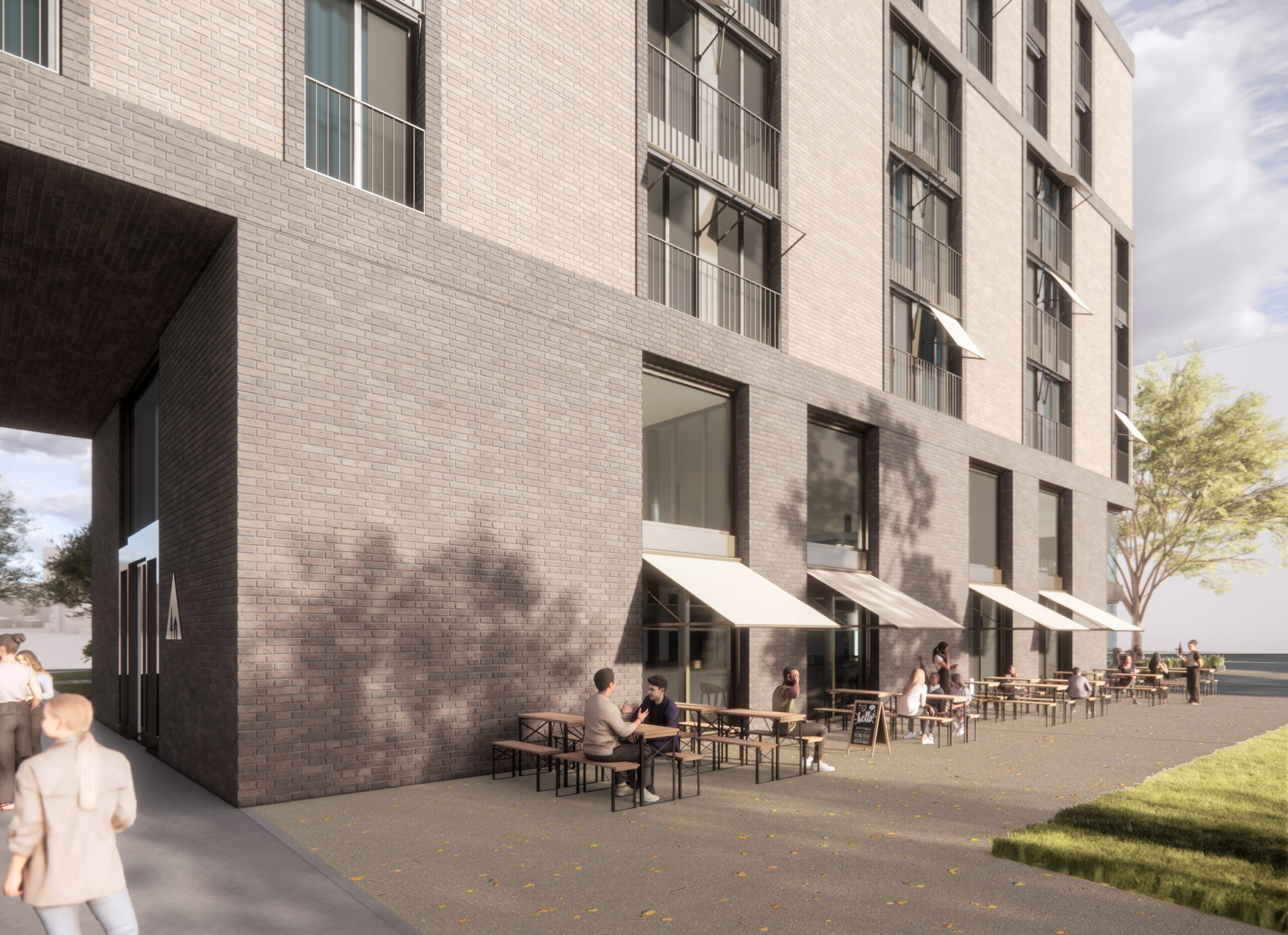
Model image Neuchâtel Youth Hostel, opening summer 2027
A life for the swiss youth hostels
On 28 December 2025, we had to say goodbye to Jack Kern, honorary member of the Swiss Youth Hostels Association. He passed away at the age of 91, surrounded by his family.
Jack Kern was elected to the Zurich Youth Hostels Association in 1962. Thus started a lifelong connection. Initially, as a member of the Executive Board, he played a leading role in a pioneering project – the new, globally acclaimed Zurich Youth Hostel was opened on 20 December 1965. In January 1969, he took over as managing director of the Zurich Youth Hostels Association. From then on, he worked for more than 20 years at the former headquarters of the company in Zurich-Wollishofen.
During his commitment to the organisations, he achieved a number of milestones. On 11 May 1973, Jack Kern was a founding member of the Swiss Foundation for Social Tourism. He took over as managing director and served in this position until his retirement. On 1 January 1992, 14 youth hostel associations merged to form the Association of Swiss Youth Hostels, which opened its new office in Zurich in 1994. “That was my greatest achievement”, said Jack Kern in an interview in 2022 to mark the 50th anniversary of the Swiss Foundation for Social Tourism.
Jack Kern was not only an important pioneer and trailblazer of the Swiss Youth Hostels, for many people he was also a role model. No one could help but be moved by his dedication, his passion and his deep connection with everyone around him. Even after his retirement, he remained closely associated with the youth hostels as an honorary member.
We would like to thank Jack Kern for his tireless work and action for the youth hostels over more than 60 years.
Climate strategy
The Swiss Youth Hostels and the Swiss Foundation for Social Tourism have been committed to effective climate protection for many years as part of their overall strategy of sustainable corporate governance. They have been systematically reducing harmful CO2 emissions since the mid-1990s.
Since 2008, we made a commitment to the Federal Office for the Environment FOEN to reduce CO2 emissions. To build on the reduction obligation, which was still valid until 2024, an application was submitted for a new obligation from 2025. This reduction obligation will remain valid until 2040, with an option to adjust it in 2030. An action plan will be drawn up for each youth hostel to further reduce CO2 emissions and achieve the targets set out in the commitment agreement.
Based on our climate strategy, we want to continue to play a pioneering role and achieve the net-zero target (-90%) as early as possible before 2050. In addition to the reduction commitment, a detailed decarbonisation plan will also be drawn up, outlining the measures to achieve the net-zero target by 2050 at the latest.
Digital development projects
At the beginning of 2025, a newly developed booking strip was launched on the website www.youthhostel.ch. It is now very easy to display youth hostels with availability. This function is primarily intended for spontaneous travellers who are still flexible in their choice of location. The new booking platform was launched at the end of 2025. It includes additional functions for booking third-party services in addition to accommodation and meals at the youth hostel.
The new booking strip and booking platform are part of a comprehensive digitalisation strategy. In 2024, the guest portal my.youthhostel.ch was launched, which enables our members and registered users to make digital purchases and manage their personal data easily. In one of the next steps of the project, booking enquiries for groups and schools will also be further simplified in 2026. In addition, our guests will gradually be offered additional supporting digital functions via the guest portal and our app. Despite many planned development steps in digitalisation, our focus at the youth hostels will continue to be on the encounters between people.
Current youth hostel projects
Geneva is an enormously important location for the Swiss Youth Hostels. After lengthy negotiations and planning work, we are fast approaching the first own youth hostel owned by the Swiss Foundation for Social Tourism in Geneva. The plans are based on the result of the project competition in the area of municipal sports facilities, which were continuously developed. The youth hostel will enable the city of Geneva to have access to affordable beds for the training facilities that are needed at the location and the Swiss Youth Hostels will be able to close an important gap in the network. Construction began on 1 July 2024, and the new youth hostel will open on 16 July 2026.
Since 2006 and the takeover by the Swiss Youth Hostels, the Swiss Foundation for Social Tourism has been renting the “Jeunotel” from the city of Lausanne, which was built between 1991 and 1993. After more than 30 years of operation, the youth hostel is in urgent need of comprehensive energy-related renovation and substantial refurbishment as well as improvements to its ambience. At the end of 2024, both partners signed an agreement on project collaboration and a lease extension. The project was launched in 2024. The preliminary project was completed in 2025.
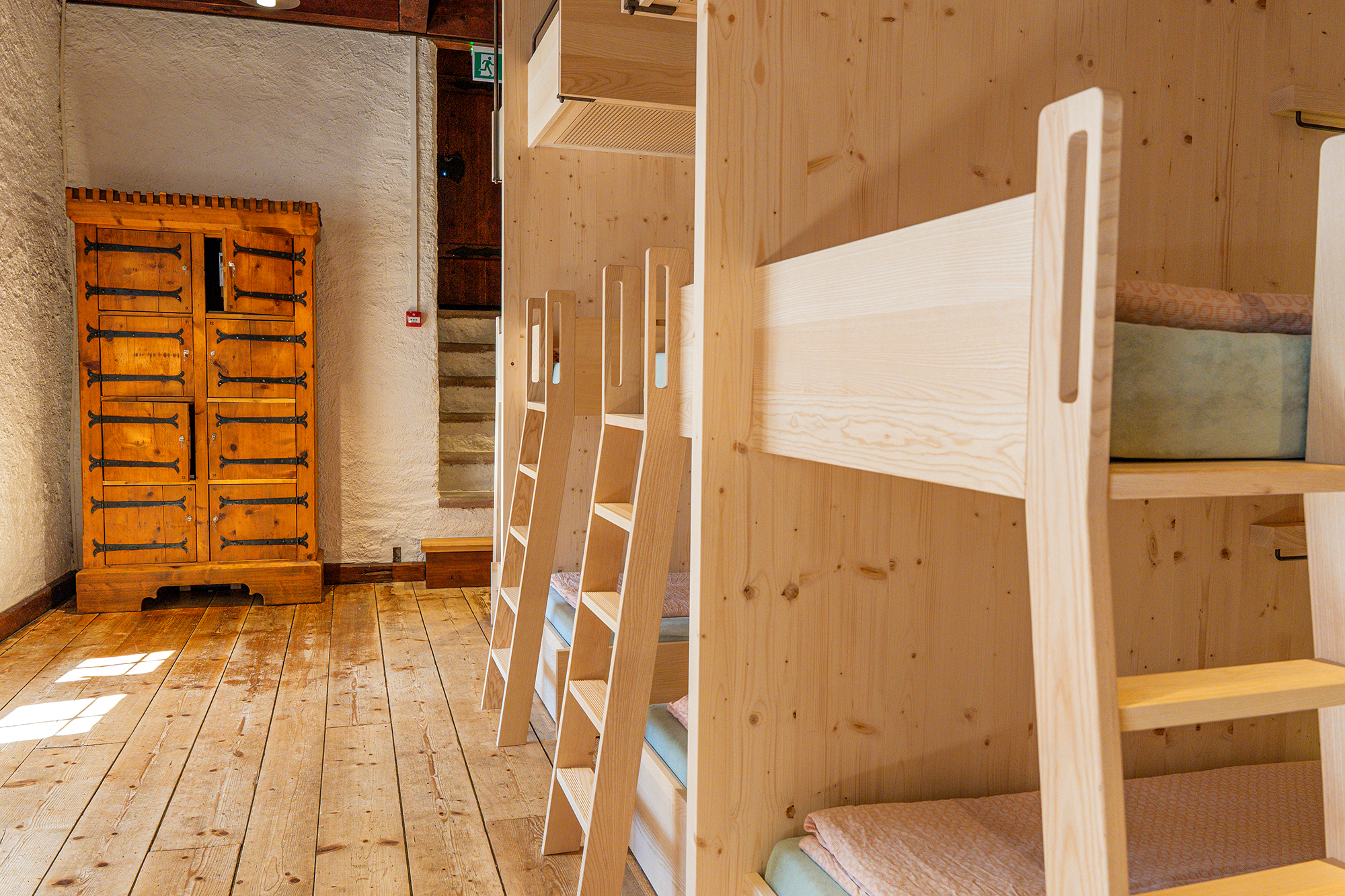
Since the 1930s, the castle in Mariastein has towered over the Leimental valley as the Rotberg Youth Hostel. It is an integral part of the region’s tourist offer. It is also an integral part of the curriculum of countless school classes, who acquire and experience their knowledge of the Middle Ages through a real building. The Board of Trustees of the Rotberg Youth Castle Foundation devotes all its efforts to the preservation of this unique castle. Improvements to safety and comfort were carried out in two construction phases. The renovation involved the careful refurbishments of the rooms with fire safety adjustments and energy optimisation. In addition, Ernst Schläpfer’s weapons collection was staged in a cinematic style. After the first phase was completed in the previous year, the second phase took place during the winter break of 2025/2026.
In 2022, the town of Martigny approached the Swiss Foundation for Social Tourism with a request to construct a youth hostel in the historic “Bâtiment de l’Horloge”. Conversion of the youth hostel with around 48 beds started immediately, financed by patron of the arts Léonard Gianadda, who has since unfortunately passed away. Following extensive renovation and conversion work, the listed youth hostel was opened on 28 February 2025.
In 2019, the city of Neuchâtel conducted an architectural competition for converting the “Les Sablons” school building into a youth hostel. The result was the unanimous winner of the “Carnets de voyages” project by Neuchâtel-based architecture firm Andrea Pelati. Planning had to be halted in 2020, as the school building was temporarily used to house another school. Planning has now continued – at the end of 2024, the Conseil Général of the City of Neuchâtel unanimously approved the loan application for constructing the youth hostel. The building permit was granted in November and construction work officially started on 13 January 2026. The opening of the youth hostel is scheduled for early summer 2027.
Following the approval of the municipal assembly in February 2026, the municipality of Surses voted in favour of the purchase of the former Hotel Cube in Savognin on 29 March 2026. The municipality will now complete the purchase of the property and initiate the further steps towards its renovation and reopening as a youth hostel. The aim is to open the youth hostel to guests as soon as possible.
New headquarters
The offices of the Swiss Youth Hostels and the Swiss Foundation for Social Tourism were located at Schaffhauserstrasse 14 in Zurich for more than 30 years. On 17 December 2025, the two organisations moved to a new, modern and barrier-free office environment at Josefstrasse 216. All employees now work on one floor – they have quickly settled into the extremely attractive office landscape developed by the Swiss Foundation for Social Tourism in collaboration with Büro Nader Interior GmbH and implemented by Soliman Zurkirchen Architects. The Swiss Youth Hostels would like to thank everyone involved for the outstanding implementation of this project. We feel very much at home in our new office space.